How to create content for different stages of the sales funnel
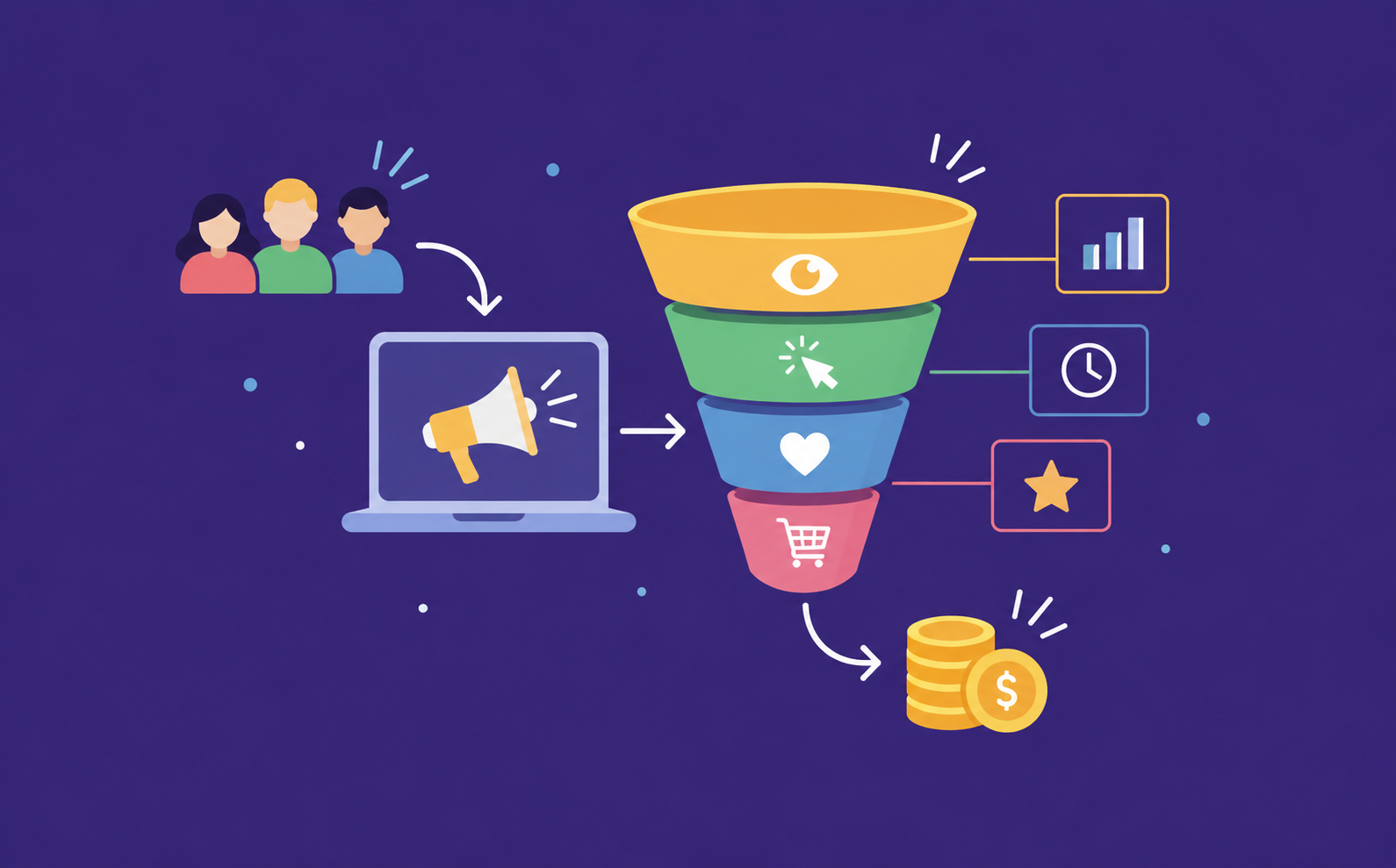
Why consider the stages of the sales funnel when planning content?
Social media posts should do more than simply tell people about a company and its products. They should also help attract new customers. That is why it is important to understand the purpose of each post and the goal it is meant to achieve.
People rarely make a purchase immediately after discovering a company. Some need to learn more about the brand and its offerings, while others want to understand the benefits of a product and decide whether it can solve a specific problem. This should be taken into account when planning content so that posts answer audience questions and provide the information people need.
The sales funnel helps structure communication with the audience step by step. It allows companies to determine which topics to cover in their posts and what to focus on at each stage.
Content for attracting attention
At the first stage, the goal is to attract new audiences and introduce them to the company and its products. This means that posts should appeal to people who are seeing the brand on social media for the first time.
When planning content, it is important to choose topics that are relevant to the audience and help draw attention to the company. These may include posts answering frequently asked questions, stories about the brand and its future plans, or content about its products. There is no need to go into too much detail at this stage. The main goal is to give people a general idea of the company and its offerings and make them interested in learning more.

For example, an English language school can publish content about how to start learning English, where to begin, and what opportunities knowing the language can open up. These topics appeal to a broad audience and help introduce people to the school without going into a detailed presentation of its courses.
It is also important to consider how the content is presented. At the first point of contact, the way a post or video is presented can determine whether someone wants to read it or watch it. Headlines and opening lines should include a hook that immediately explains why the topic might be interesting, while the visual design should catch the audience's attention.
It is also important to think about content distribution, as posting only on the company's own account does not always help reach new people. To expand reach, companies can use paid promotion, relevant communities, reposts, and social media recommendations.
Reach, views, profile visits, and the number of new followers can help measure the results, along with the share of people who have not interacted with the account before. Likes and comments can also indicate interest in the content, but when measuring audience acquisition, it is more important to understand how many new people saw the content and became interested in the company.
Content for building interest and creating demand
After discovering a company or its product, potential customers may become interested in the offering but still be unsure whether it is right for them. At this stage, it is important to show how the product's features relate to the audience's needs and explain when it can be useful and what problems it can help solve.

For example, an English language school can explain how its lessons help students prepare for exams, communicate more confidently while travelling, or overcome the language barrier.
Such posts help people better understand the offering and assess its value for their own needs.
At the next stage, content should help potential customers make a purchase decision.
Content for helping customers make a purchase decision
At this stage, potential customers are already interested in the product and understand its value, but they still need to learn more about the details before making a purchase. Factors such as price, payment methods, delivery times, warranties, and return policies can influence their final decision, so this information should be clearly explained in social media posts.
If a company offers several purchase options or product packages, it is worth explaining the features of each one to make it easier for customers to choose. Companies should also provide information about what happens after the purchase and what kind of support customers can expect.

For example, an English language school can share information about course fees, duration, class schedules, and payment options. If the school offers several programmes, it is important to explain how they differ and which proficiency levels they are suitable for.
The ordering process also deserves attention. The easier it is for someone to place an order or ask a question, the fewer obstacles stand in the way of making a purchase. That is why posts should include working links to order or sign-up pages, up-to-date company contact details, and information on how to request a consultation.
Content performance at this stage can be measured by the number of enquiries, direct messages, visits to the order page, and completed purchases. These metrics help show how effectively content generates leads and sales, as well as where potential customers are most likely to drop out of the process.
Content for customer retention and repeat sales
After a purchase, it is important to continue communicating with customers rather than ending the relationship with an order confirmation and a thank-you message. At this stage, content should maintain customers' interest in the company and its products, share special offers, and keep the brand connected with its audience.
For example, an English language school can publish tips for independent practice, additional language-learning materials, and information about conversation clubs. It can also tell current students about the next levels of study and opportunities to continue learning after completing a course.
It is also important to encourage repeat purchases by sharing new offers, additional products, and loyalty programmes that may interest existing customers. However, this communication should not turn into constant advertising.

It is important to maintain communication with customers by responding to their comments and messages in a timely manner and asking for their opinions about products and service quality. This interaction helps companies better understand their audience's needs, take customer feedback into account, and build long-term relationships.
Content performance at this stage can be measured by the number of repeat purchases, enquiries from existing customers, and responses to new special offers. These metrics help companies understand how successfully they maintain customer interest and encourage people to return to their products.
How to combine content for different stages of the sales funnel in one account
A company's social media account can attract people at different stages of their relationship with the brand. Some have just discovered the company, others are already exploring its products, some are ready to make a purchase, while existing customers may return for another order. That is why a content plan should include posts with different goals, helping the company not only attract new customers but also drive sales and retain its existing audience.
There is no universal ratio of posts for each stage. A company that is just entering the market may need more content to introduce its brand to the audience. If a company already has a base of regular customers, it may be more useful to focus on repeat sales and maintaining interest in its products.
It is also important to analyse content performance regularly and adjust the content plan when necessary. Reach and views help measure how successfully a company attracts new audiences. Profile visits and follows indicate interest in the company, while the number of enquiries, lead-to-customer conversion rate, and sales volume help assess how content affects business results. Popsters can be used to analyse social media posts, while enquiries and purchases can also be tracked in a CRM system.

Overall, the sales funnel helps companies build a content plan around their business goals and audience needs. Regular content analysis makes it possible to evaluate promotion results, identify which areas are performing better, and understand what needs to be changed.

Try Popsters Trial plan to get content activity statistics of any pages for a next 7 days for free
Try for free
Popular
-
 How to Increase Telegram Subscribers: Best Free Ways
-
 How to Remove fake Followers on Instagram and Is It Necessary?
-
 YouTube Analytics and Statistics for Other Channels
-
 Instagram Statistics and Analysis: How to View Data of any Account
-
 Analytics and Statistics for Any Telegram Channel or Chat
Try Popsters Trial plan to get content activity statistics of any pages for a next 7 days for free
Try Popsters