Faceless content: How to build a brand without showing your face

“You need to show your face in stories and reels!” This is advice that social media marketers have been hearing for years. The idea that “people buy from people” has reinforced the belief that building a brand requires regularly appearing on camera. But is being on camera really essential for brand growth?
Not necessarily.
Instead of building a content strategy around a specific person, a business can focus on its products, highlight their benefits, explain how they are made, or simply share useful information with its audience. This approach is known as faceless marketing — a content strategy that allows brands to introduce their products and demonstrate their value without requiring someone to appear on camera all the time.
This approach can simplify content production. Teams can prepare materials in advance, distribute tasks among employees, and adapt publications for different social media platforms. Artificial intelligence can also support the process by generating voiceovers, adding subtitles, and creating images or videos for social media posts.
Which content formats should you use?
When creating faceless content, the first thing to consider is the purpose of each publication. Do you need to showcase a product, explain a complex topic, or help users solve a specific problem?
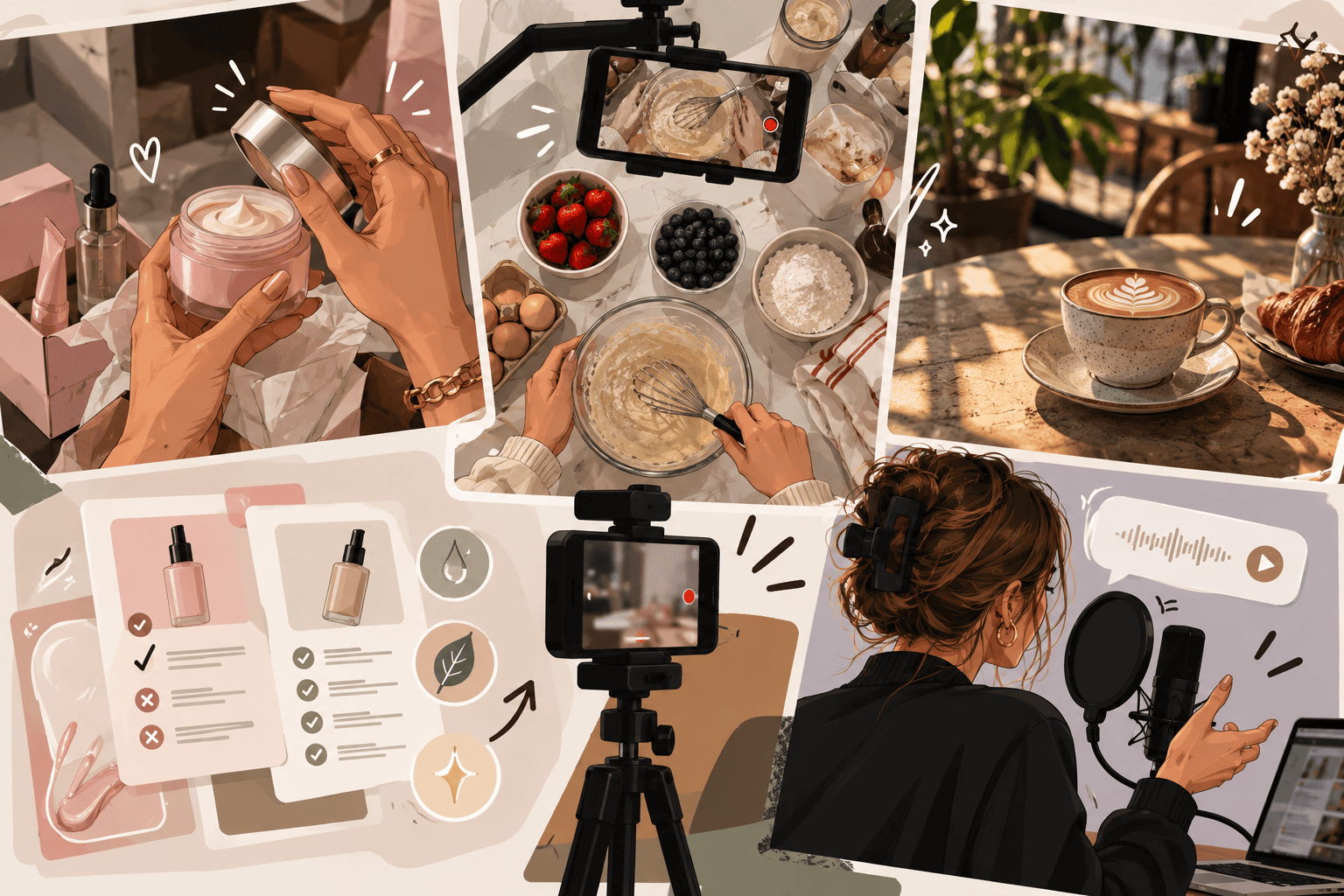
There are five main formats to consider:
-
Close-up shots of hands. This includes unboxing videos, applying skincare products, assembling items, and preparing drinks. These videos allow viewers to see product details that are difficult to capture in a regular photograph. You can also incorporate natural sounds from the process, such as packaging rustling, a cream jar lid clicking shut, or milk being frothed. These sounds create an ASMR effect.
-
First-person and overhead videos. These videos recreate the viewer's perspective and are ideal for step-by-step tutorials, recipes, product arrangements, and behind-the-scenes business processes. For example, a bakery could film the process of making fresh bread, showing the different production stages while highlighting the freshness of its products and encouraging viewers to try them.
-
Atmospheric shots. Examples include sunlight falling across a coffee shop table, a barista pouring milk into coffee, a baker taking bread out of the oven, or a skincare product displayed on a bathroom shelf. These visuals help communicate a brand's mood and can serve as backgrounds for text and voiceovers. However, it is important that the imagery remains relevant to the topic and supports the message of the publication.
-
Text-based videos, infographics, and carousel posts. These formats make it easier to explain complex topics, compare different options, and share useful information with an audience. For example, a skincare brand could create a carousel explaining the differences between two serums and offering tips on how to choose the right one.
-
Voiceovers. A voiceover allows you to explain what is happening on screen or provide instructions without appearing in the video. For example, a coffee shop could film the preparation of a cappuccino while explaining the difference between Arabica and Robusta coffee beans in a voiceover.
When choosing a format, consider your audience's interests and think about which type of content will capture their attention and communicate your main message effectively.
How to use faceless content across different industries?
The same content format can serve different purposes depending on the industry and business objectives. Let's look at a few examples.
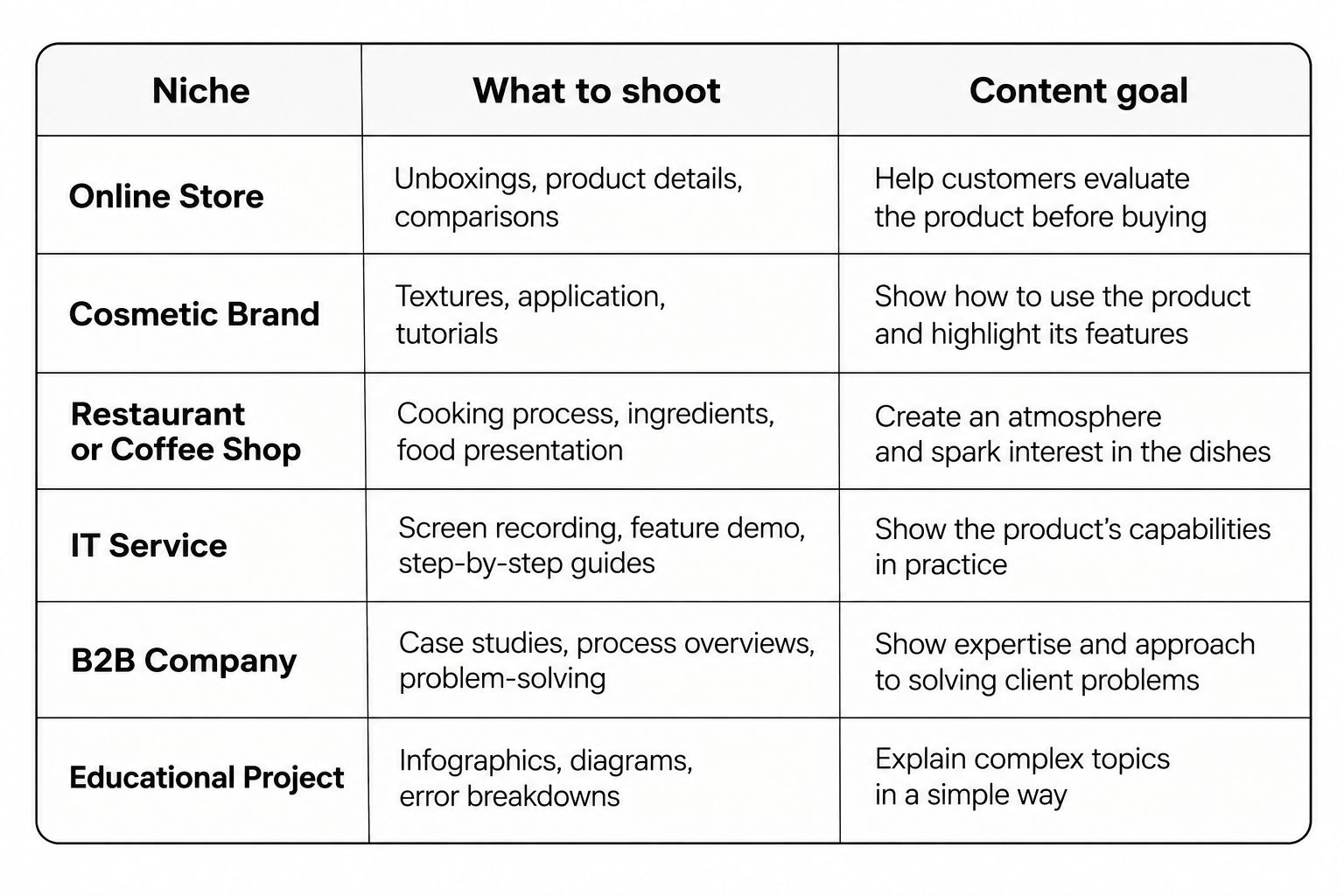
These examples can be adapted to your product, target audience, and chosen social media platform.
It is also worth remembering that if an expert's personal brand plays an important role in the customer decision-making process, there is no need to completely eliminate on-camera content. You can combine both approaches. The key is to choose formats that communicate your product's value and help differentiate it from competitors.
content creation. It can be used to generate illustrations and animations, create virtual characters, develop scripts, and adapt content for different social media platforms.
However, this approach also has its limitations. AI tools can distort the appearance of a product. In some cases, it is simply easier to film the actual product than to generate an image of it.
If you frequently use realistic AI-generated images or avatars, make sure you do not mislead your audience. You should also check the usage rights for all materials and music included in your content.
How to keep your audience engaged without showing a face?
The first few seconds of a video are crucial. You need to capture the viewer's attention with a hook, then deliver on the promise made at the beginning by answering a question or showing what you initially introduced.
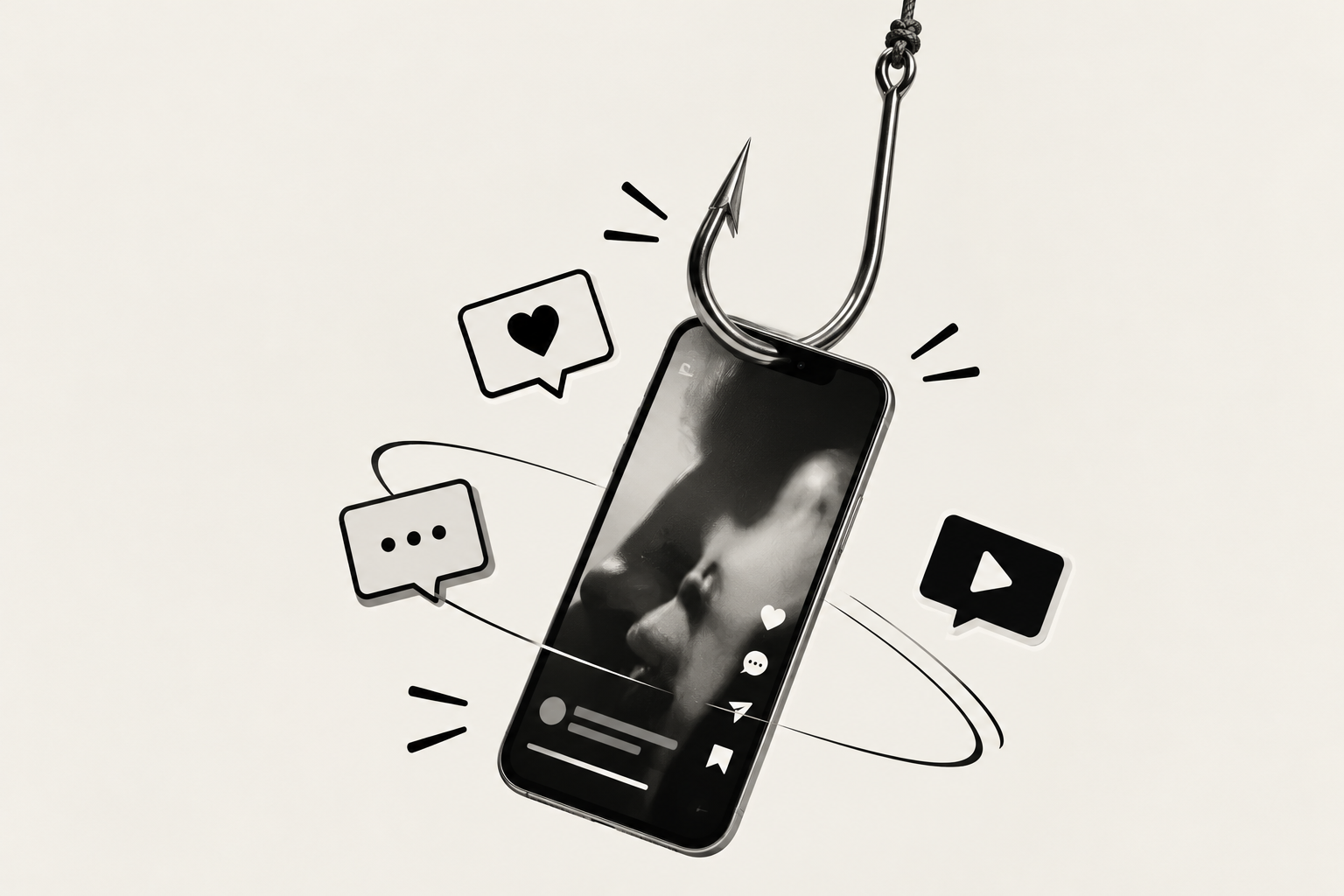
For example, a video about skincare serums could start with the question: “Why does one serum work better for dry skin while another is more suitable for oily skin?” The video could then compare the products and explain how to choose the right one.
For tutorials, show each step in a clear and logical sequence. For unboxing videos, give viewers the opportunity to examine the product from different angles and hear the sounds of the unboxing process.
Editing also influences how viewers experience a video. Quick transitions between shots add energy and keep the content dynamic, while a slower pace gives viewers more time to examine the details.
For any business, content should ultimately contribute to sales. That is why it is important to think about the next action you want your audience to take.
Instead of using a direct “Buy now” call to action, you could invite viewers to leave a specific keyword in the comments to receive a guide, discount, or product link. A chatbot can then automatically send the information via direct message, making it easier for interested users to move towards a purchase.
Where to find visual content and should you use AI?
Creating faceless content does not mean you need to organize a new shoot every time. You can film a single workflow from several angles, capture individual details separately, and prepare materials for different publications.
One filming session can produce a short video, a step-by-step tutorial, several Instagram Stories, and a post about the company's internal processes.

Stock photos and videos are useful for creating an atmosphere and illustrating general topics. However, they cannot replace authentic footage of your products and actual business processes. Before publishing third-party materials, always check whether you have the appropriate rights to use them.
AI opens up even more possibilities for content creation. It can be used to generate illustrations and animations, create virtual characters, develop scripts, and adapt content for different social media platforms.
However, this approach also has its limitations. AI tools can distort the appearance of a product. In some cases, it is simply easier to film the actual product than to generate an image of it.
If you frequently use realistic AI-generated images or avatars, make sure you do not mislead your audience. You should also check the usage rights for all materials and music included in your content.
How to measure the effectiveness of faceless content?
To understand whether your chosen approach is working, start by testing several content formats and comparing their results. Then look at which publications receive the most saves and shares, and which ones encourage users to visit your profile or website.

Each metric serves a different purpose:
-
Views and reach help you understand how many people have seen your content.
-
Average watch time and completion rate show how effectively your video holds viewers' attention.
-
Saves and shares indicate whether your content is useful and valuable to your audience.
-
Link clicks, inquiries, and purchases help you determine whether your content is contributing to your business objectives.
It is important to evaluate these metrics in the context of your content goals. A high number of views does not always translate into sales, while a post with relatively low reach may attract highly interested potential customers.
If a video consistently achieves its intended objective, you can build on its success by testing new topics, experimenting with different presentation styles, or trying alternative hooks.
If your publications generate views but fail to encourage the desired actions, take a closer look at whether you are providing enough information about the product and whether your audience clearly understands what to do next.
Over time, this process helps you develop your own content system based on effective formats, a consistent visual identity, and your audience's response

Try Popsters Trial plan to get content activity statistics of any pages for a next 7 days for free
Try for free
Popular
-
 Analytics and Statistics for Any Telegram Channel or Chat
-
 Instagram Statistics and Analysis: How to View Data of any Account
-
 YouTube Analytics and Statistics for Other Channels
-
 How to Remove fake Followers on Instagram and Is It Necessary?
-
 How to Increase Telegram Subscribers: Best Free Ways
Try Popsters Trial plan to get content activity statistics of any pages for a next 7 days for free
Try Popsters