The battle for attention: how information noise shapes audience behavior
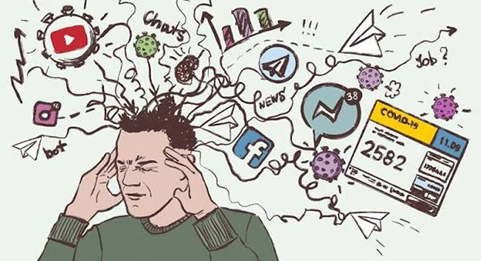
Not long ago, it was enough to purchase advertising space on television or in a magazine—audiences gathered around their screens at a specific time. Today, people decide for themselves what to watch, when to watch it, and on which platform.
The average internet user worldwide now spends approximately 6 hours and 40 minutes online every day, which is nearly one-third of their waking hours. However, while the amount of available content has grown exponentially, human attention has not. Instead, people are forced to divide their limited attention across an ever-expanding stream of information.
Companies invest millions in social media advertising and promotion, yet their real competition is no longer other brands. Instead, they compete with memes, messages from friends, breaking news, and endless streams of entertaining content. As a result, marketers increasingly refer to the attention economy, where the scarcest resource is no longer advertising reach or frequency—it is human attention.
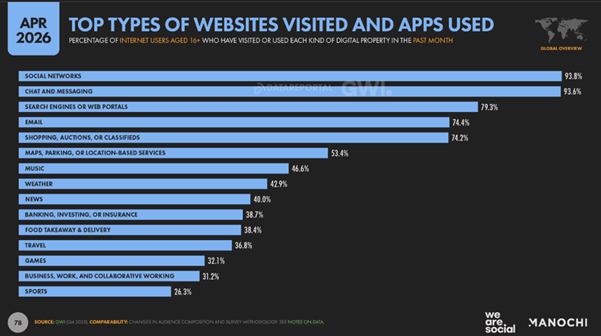
Source: Digital 2026 Mid-Year Global Update Report (DataReportal)
What is information noise?
We are living through an information revolution in which access to knowledge is no longer limited or inherently valuable. In the past, obtaining a highly sought-after book often meant waiting in long lines or relying on personal connections. Such books were considered extremely valuable.
Today, with just a few clicks, anyone can find a book, a recipe, an answer to virtually any question, or enroll in an online course. While this unprecedented accessibility has transformed the way we learn, it has also created a constant overload of information.
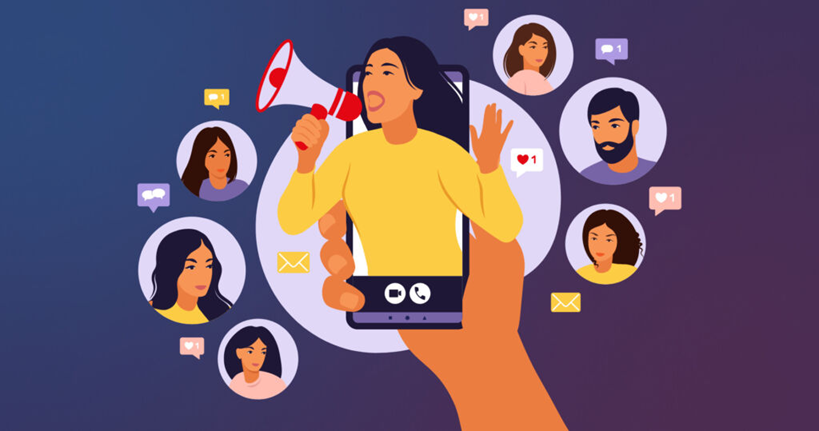
Information noise refers to the overwhelming flow of unfiltered information, where the value of each individual piece of content decreases as the overall volume of information increases.
As a result, users are becoming less likely to analyze every message in depth. Instead, they increasingly scan content for key points. The constant need to stay informed encourages people to check the news, notifications, and social media feeds repeatedly throughout the day—consuming significant time and mental energy while often providing little meaningful benefit.
The brain has learned to protect itself
The human brain processes information through two cognitive systems: a fast, intuitive system and a slower, analytical one. When faced with information overload, the intuitive system takes over, making split-second decisions about whether a piece of content deserves attention based on familiar patterns and emotional cues.
One of the most well-known examples of this adaptation is banner blindness.
Banner blindness is a psychological phenomenon in which users automatically ignore advertising elements on websites and mobile applications.
The primary reason behind banner blindness lies in the brain's natural defense mechanism. Over time, our brains have learned to recognize common advertising patterns and instinctively filter them out.

Research also shows that today's users rarely read articles word for word. Instead, they scan the page, focusing on headlines, opening sentences, and visually distinctive elements, while traditional advertising placements often go unnoticed.
As a result, the brain no longer ignores only advertisements—it filters out any predictable content patterns, including repetitive headlines, generic calls to action, familiar visual formats, and recurring short-form videos such as Reels and Shorts.
This is why modern marketing is increasingly focused on winning the first two to three seconds of a user's attention. Within those crucial moments, people decide whether to stop scrolling or move on to the next piece of content.
How user behavior has changed
Information noise has fundamentally changed the way people interact with content. Instead of leaving comments or clicking the "Like" button, users are increasingly saving posts, sharing them through private messages, or returning to them later. This pattern of engagement has become known as silent consumption.
The absence of public engagement does not necessarily indicate a lack of interest. A user may carefully read a piece of content, remember it, or even apply the information in practice without performing any visible action. As a result, engagement has become less observable, while attention itself has become increasingly selective in an environment saturated with information.
Users have also developed a growing preference for instant access to information, accompanied by greater dependence on digital devices—particularly smartphones, tablets, and laptops.

Today's users are more likely to:
• make decisions more quickly;
• switch between tasks more frequently;
• read long-form content less often from beginning to end;
• return to saved content at a later time;
• become more selective when choosing information sources.
What This Means for Brands
The shift in user behavior caused by information overload is gradually reshaping the rules of content marketing.
To succeed in today's environment, brands must recognize that content needs to be more than just high quality—it must also be distinctive. Content that fails to stand out is quickly lost in the constant stream of information, making it easy for audiences to overlook.
It is no longer enough to simply talk about a product or service. Brands must differentiate themselves through their perspective, storytelling, tone of voice, and overall presentation. Every interaction should feel authentic and difficult to replicate.
Most importantly, content must capture attention within the first few seconds. If it fails to do so, users are likely to continue scrolling without giving it a second thought.
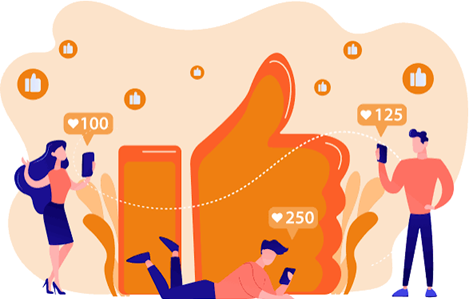
Although likes and comments remain valuable performance indicators, they no longer provide a complete picture of audience engagement. Marketers should also pay close attention to metrics such as saves, shares, and video completion rates, as these increasingly reflect the true value of content. Consequently, measuring content performance has become far more complex than relying solely on visible interactions.
Conclusion
No matter how much we try to escape information overload, it is no longer a temporary challenge—it has become a defining characteristic of the digital world. In this new reality, human attention has become the most valuable and limited resource.
At the same time, silent engagement—including saves, shares, and repeat views—has become increasingly important, as it provides deeper insight into whether content genuinely resonates with its audience.
For brands, this means creating content that reflects the realities of today's digital environment while earning users' attention through relevance, originality, and value.
In the age of information noise, attention cannot be bought—it must be earned.

Try Popsters Trial plan to get content activity statistics of any pages for a next 7 days for free
Try for free
Popular
-
 Instagram Statistics and Analysis: How to View Data of any Account
-
 Analytics and Statistics for Any Telegram Channel or Chat
-
 How to Remove fake Followers on Instagram and Is It Necessary?
-
 YouTube Analytics and Statistics for Other Channels
-
 How to Increase Telegram Subscribers: Best Free Ways
Try Popsters Trial plan to get content activity statistics of any pages for a next 7 days for free
Try Popsters