How to turn customer questions into a content plan

Every month, companies put together a content plan for the upcoming period, come up with new topics, and try to figure out what their audience will find interesting. However, many of the answers they need can already be found in their existing customer communication channels. People tell businesses what they want to learn, what information they are missing, what interests them, and what questions or concerns they have before making a purchase.
“How do I choose the right option?”, “What’s the difference between these products?”, “Would this be suitable for…?”, “Why does it cost so much?” These are common questions for employees who respond to customer messages, but for social media managers, each one can be the starting point for one or even several posts.
Different people may face the same problem. This means that the answer is useful not only to the person who asked the question, but also to other potential customers.
A single question does not have to become just one post. It can be explored from different angles and adapted to several formats.
Where to find customer questions?
When preparing a content plan, it is worth looking at all the points where your business interacts with its audience, as questions can arise at any stage of the customer journey.

Comments and direct messages. These are common places for questions about products, prices, purchasing terms, and how to use a product.
Sales teams and customer support. They interact with customers every day and learn what holds people back from making a purchase, which options they are considering, and what information they struggle to find on their own.
Reviews. Customers often explain what they were looking for, why they chose a particular option, and what turned out to be important after the purchase.
Post-purchase communication. Customers may ask, “How do I use this?”, “How should I care for it?”, or “What should I do if…?” These questions can be turned into tutorials and other useful resources for customers.
Search queries. Potential customers often look for answers on their own. They compare options, read reviews, and try to understand a problem. For example, they might search for “How do I choose…?”, “What’s best for…?”, “How much does it cost?”, or “How do I do this correctly?” These queries can help you identify topics to include in your content plan.
Once you have collected customer questions, group them by topic and identify which ones come up most often. Then decide which questions are worth addressing in your content and which do not need a separate post just yet.
How to evaluate a question as a content idea
- Frequency: How often do customers ask this question?
- Relevance: Does it relate to the audience’s current needs?
- Broader appeal: Would the answer be useful to one person or to many?
- Stage of the customer journey: Does it help people choose, purchase, or use the product later on?
- Expertise: Can the company provide a genuinely useful answer?
- Content potential: Can the topic be explored from different angles and in several format?
How to turn one question into several posts
A single customer question often contains several topics that can be explored separately. For example, you can explain the details, compare similar options, or address common concerns.
Suppose a customer asks, “Why does this cost so much?” You can approach the question from several angles:
- A breakdown of the price: What makes up the total cost?
- A comparison: How does this option differ from cheaper alternatives?
- A case study: What problem does it solve, and what results does it deliver?
- Common misconceptions: What do people often misunderstand about the price?
- Behind the scenes: What goes into the product or service, from production and materials to the work of specialists and customer service?
- FAQ: What other questions do customers have about pricing and purchasing terms?
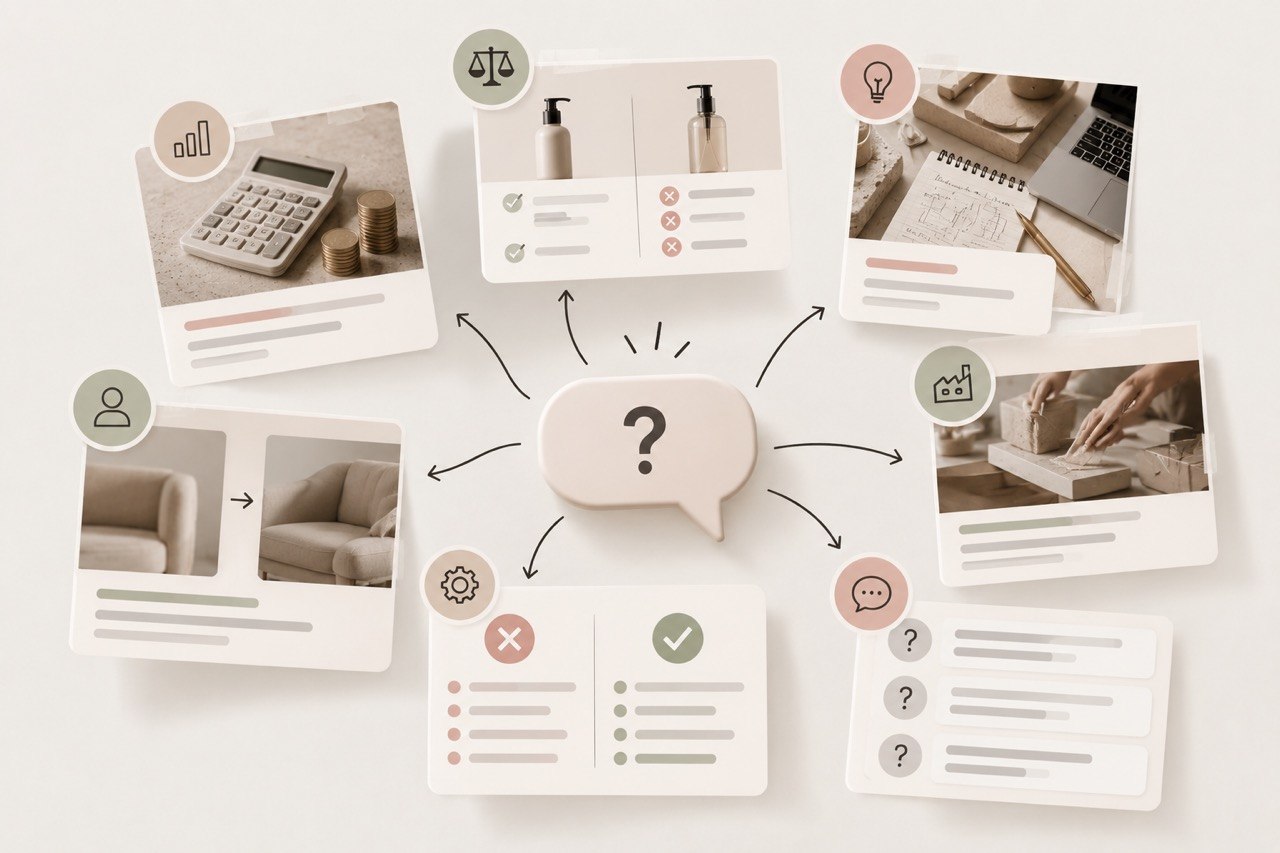
Each post can address a different part of the customer’s concerns before making a purchase, making the content more useful.
How to choose the right formats for each topic
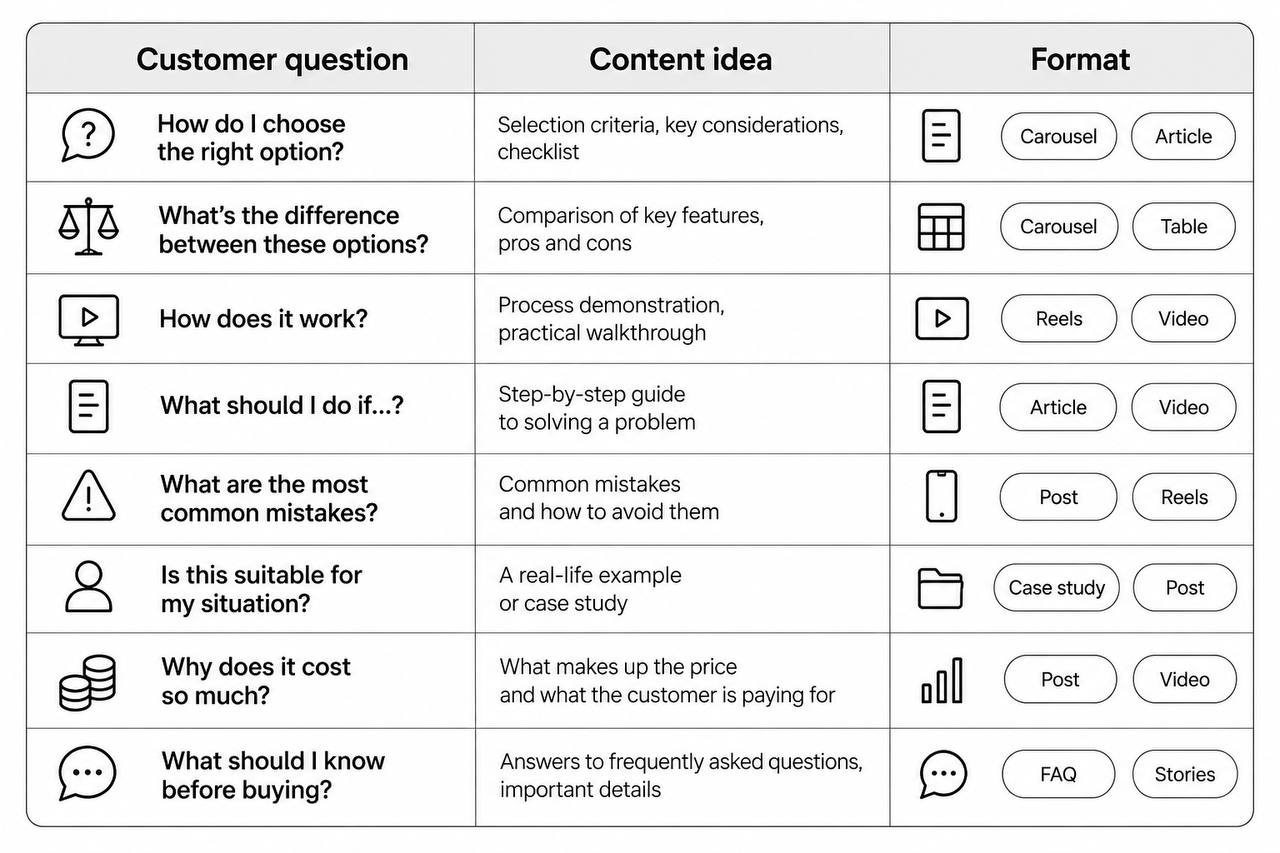
Once you have selected the main topics, the next step is to decide how best to present them. The same question can be answered in different ways: sometimes a short response is enough, while other topics require a detailed explanation, a comparison, or a practical example.
That is why you should choose a format based on which way of presenting the content will best answer the customer’s specific question, rather than simply choosing what is popular at the moment.
How to tell whether your content actually answers the customer’s question
After publishing a post, it is important to look beyond its reach and assess whether it actually addressed the problem the customer came with. For example, a post may be built around a real question but still be too general to provide a clear, specific answer.

Pay attention to how the audience responds. If people continue asking the same question, request clarification, or raise related questions after the post is published, it may indicate that the topic has not been fully covered. For example, a post may answer the question “How do I choose a face cream?”, but the comments may include questions such as “Which one is suitable for sensitive skin?” This suggests that the audience needs more detailed guidance.
It is also important to consider what people do after viewing the content. If they visit product pages, save posts or videos, contact the company for advice, or take another step toward making a purchase, it suggests that the content was not just interesting but genuinely useful.
A good content plan does not necessarily start with an idea for a post. Sometimes, all you need to do is pay attention to the questions customers are already asking. These questions can become the starting point for new topics, formats, and content ideas.

Try Popsters Trial plan to get content activity statistics of any pages for a next 7 days for free
Try for free
Popular
-
 YouTube Analytics and Statistics for Other Channels
-
 Analytics and Statistics for Any Telegram Channel or Chat
-
 Instagram Statistics and Analysis: How to View Data of any Account
-
 How to Remove fake Followers on Instagram and Is It Necessary?
-
 How to Increase Telegram Subscribers: Best Free Ways
Try Popsters Trial plan to get content activity statistics of any pages for a next 7 days for free
Try Popsters